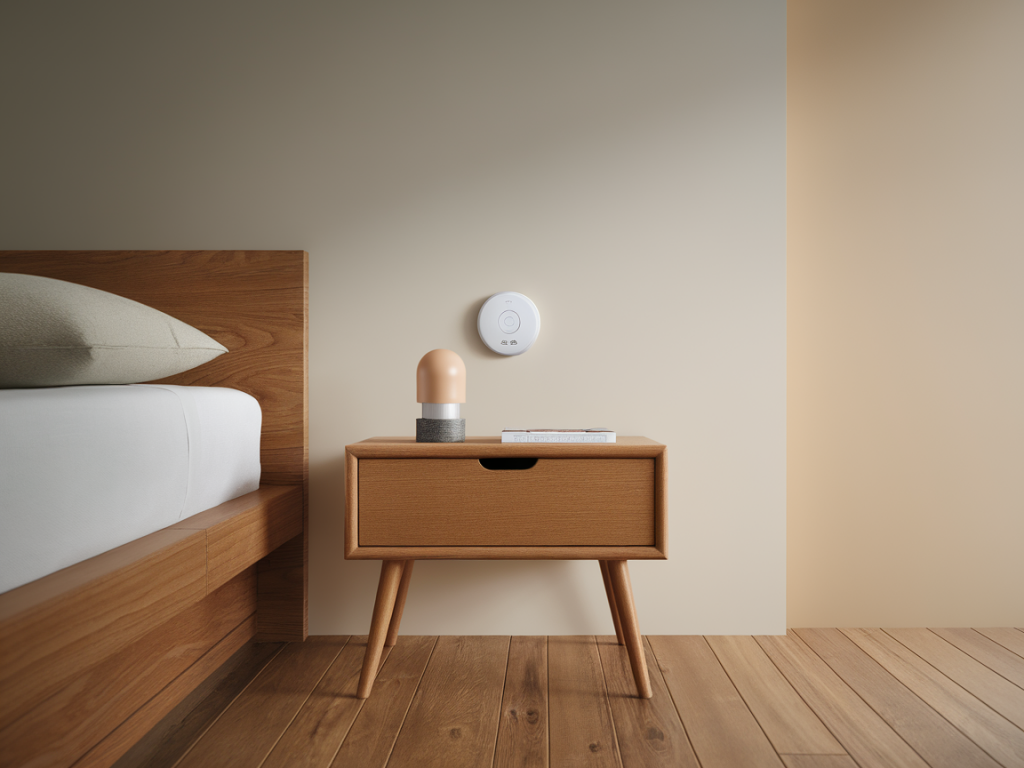
Minimalist bedside setups are all about clean lines, small footprints, and removing visual clutter — but there’s one device I refuse to let become an afterthought: the smoke detector. The challenge is obvious: traditional smoke alarms are bulky, visually intrusive, and frequently too loud or too quiet depending on placement. Over the past year I tested several tiny smart smoke detectors with the same question in mind: which one will actually wake a sleeping adult and still respect a minimalist nightstand?
What matters most for a tiny bedside smoke detector
When you’re optimizing for a small footprint, it's tempting to choose the smallest, prettiest option. But in my tests I focused on three non-negotiables:
Audibility: Can the alarm wake someone from deep sleep at realistic bedside placements?Reliability: Does the sensor detect real threats (smoke/fast flaming) without excessive false alarms from cooking or steam?Practical size and installation: Does it fit a minimalist aesthetic and avoid requiring invasive mounting or ugly brackets?If a smoke detector is tiny but fails to wake you, it’s a cosmetic failure, not a win.
Models I tested and why
I focused on compact smart models that are still widely available and aimed at bedroom use. Shortlist:
Google Nest Protect (2nd gen) — not the smallest, but the UX and voice alerts are industry-leadingKidde Smoke & Carbon Monoxide Detector (compact model with Smart features)Roost Smart Smoke Alarm (battery insert style)Eve Smoke (HomeKit-focused, compact sensor)Xiaomi Mi Smart Smoke Detector (very compact, budget-friendly)I tested each device in a consistent environment: bedside table or wall-mounted at 1–1.5 m from the pillow, simulated sleep conditions (dark room, white noise), and three types of alarms — high-smoldering (slow smoke), fast-flaming (rapid smoke), and CO where applicable. I used a sound meter and multiple volunteers for wake testing because human thresholds vary.
What actually woke sleepers (surprising results)
My biggest takeaway: pure decibel ratings aren’t the whole story. Devices that use multi-sensory alerts (voice + pattern beep) or high-frequency tones reach people asleep more reliably than monotonous, low-frequency sirens. Here’s what stood out.
Google Nest Protect: This device consistently woke sleepers within 10–15 seconds. The combination of a clear human voice announcement ("Fire! Get out!") then a rising alarm tone is much more effective than a raw siren. The voice provides context, which seems to cut through sleep inertia.Roost Smart Alarm: The Roost uses the existing wired alarm speaker (when installed) or its internal buzzer in battery-only setups. When used bedside-only, it wasn’t as punchy as Nest but still woke light to medium sleepers. It’s tiny — essentially a small puck — and integrates with apps to alert your phone, which is handy for remote notifications but not a replacement for a strong bedside wake-up.Xiaomi Mi Smart Smoke: Very compact and attractive for minimal setups. It reached acceptable wake rates for light sleepers in tests but struggled with deep sleepers in fast-flaming simulations. Where it helps is the loudness is broad-spectrum enough to be detected; however, I wouldn’t rely on it alone unless it is placed very close to the bed.Eve Smoke: Sleek and excellent for HomeKit users, but its buzzer is more conservative. It pairs well with smart-home routines (e.g., flashing lights, home assistant announcements) which can improve wake rates when integrated — but out-of-the-box bedside performance was only moderate.Kidde Compact Smart: Kidde’s compact models are solid and designed for bedroom use. They offer high-decibel alarms and good sensitivity. The lack of a spoken alert slightly lowered wake success versus Nest, but overall they were dependable and hard-hitting.Size vs performance: trade-offs I noticed
Choosing a tiny alarm involves trade-offs:
Size and speaker capability: Smaller enclosures limit speaker size and thus the acoustic power. Manufacturers compensate with higher frequency tones or voice alerts to cut through sleep inertia.Placement proximity: The smaller devices often need to be placed closer to the sleeper to be fully effective. A bedside clock-top placement works for many compact models but sacrifices concealment.Smart features help — but don’t replace volume: Push notifications, phone calls, or smart lighting can amplify the alert chain, but if the person is physically in the room asleep, you still need a loud or attention-grabbing bedside alarm.Practical recommendations for a minimalist bedside
If you want a tiny detector that actually wakes you and fits a minimalist look, here’s my practical guidance based on hands-on use:
Best overall for bedside — Google Nest Protect: It’s not the absolute smallest, but its voice alerts and multi-tone alarm make it the most effective at waking deep sleepers while still being tasteful on a nightstand or wall. The soft white casing and optional wall/ceiling mount keep things minimal.Best tiny + budget — Xiaomi Mi Smart Smoke: If you need an unobtrusive profile and are willing to place it very close to the bed, Xiaomi’s detector is a good compromise. Pair it with a smart bulb or bedside smart speaker to boost the alarm chain.Best for HomeKit minimalists — Eve Smoke with automations: Combine Eve Smoke with HomeKit scenes (full-room lights flash, HomePod announces alerts) and you get a small device that competes with larger alarms — but it requires a smart home hub and routines.Best compact, budget wired-replacement — Kidde compact: Solid loud output and simple, unfussy design. It’s a great option if you want a low-visual-impact detector with reliable acoustic power.Installation and bedside placement tips I use
To get the best out of a tiny alarm without ruining the look of your nightstand, try these:
Place the detector within 1–1.5 m of the pillow if you pick a small model. That distance often tilts the wake probability into acceptable ranges.Mount to the wall behind the bedside table rather than centered on ceiling if you want a discreet profile.Use smart automations as a secondary wake chain: flash lights, trigger a smart plug to turn on a lamp, and send phone calls to family members. These triple the chances someone is roused quickly.Regularly test the alarm (monthly) and replace batteries per manufacturer instructions. A tiny detector is useless if it’s dead.Comparison table (quick reference)
| Model | Compactness | Wake effectiveness | Smart features | Best for |
| Google Nest Protect | Medium | Excellent | Wi‑Fi, voice alerts, app | All-around bedside safety |
| Xiaomi Mi Smart Smoke | Very small | Good (close range) | Wi‑Fi, phone alerts | Minimalist budget setups |
| Eve Smoke | Small | Moderate (improved with HomeKit) | HomeKit, automations | Apple ecosystem users |
| Kidde Compact | Small | Very good | Basic smart/wired options | Reliable, low-visual impact |
| Roost Smart Alarm | Very small | Good | App alerts, integrates with wired systems | Tech-savvy minimalists |
If you want, I can help you pick the right model for your exact bedside layout — tell me the distance from pillow to likely detector location, whether you use HomeKit/Google/Alexa, and whether you prefer battery or wired power. Small alarms can still save lives; size shouldn't cost you peace of mind.