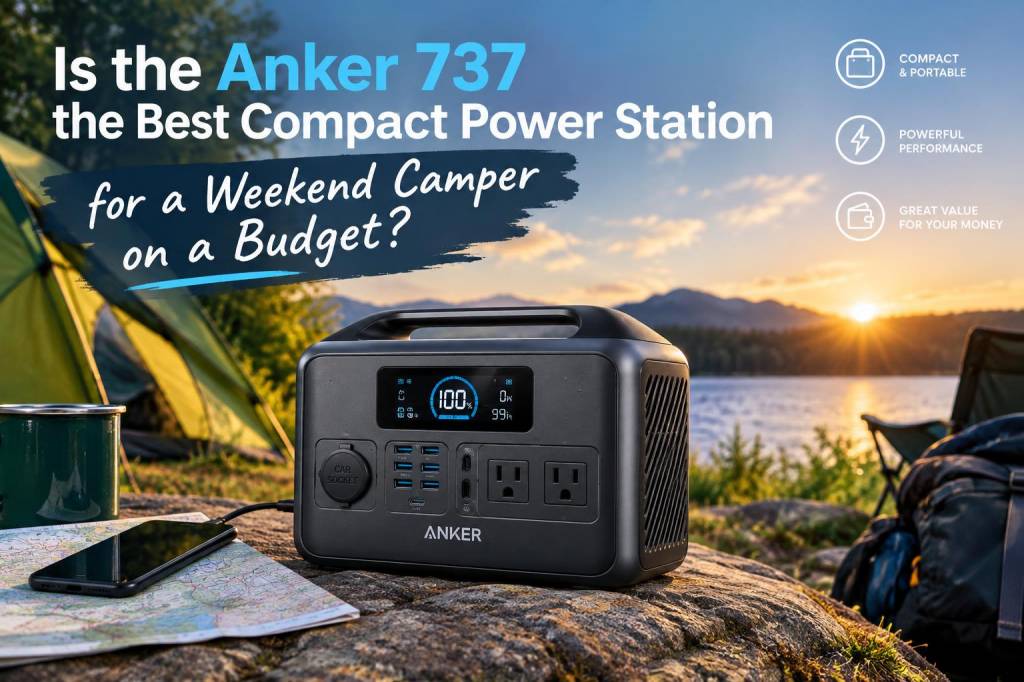
When I first unboxed the Anker 737 (PowerHouse 24K) I was looking for a compact, reliable power station that wouldn’t break the bank — something I could throw in the car for a weekend campout, keep my phone and camera topped up, maybe run a small cooler and a 12V air pump. After spending time testing it alongside a couple of rivals, here’s how it performs in real use and whether it’s the best budget-friendly option for a weekend camper.
Who the Anker 737 is for
In plain terms: the Anker 737 targets campers who want a balance of capacity, power and portability without the premium price of high-end units. If your typical weekend setup involves charging phones, tablets, a laptop, a camera or running a portable fridge for part of the day, the 737 hits a convenient sweet spot.
It’s not for heavy off-grid living or running big appliances (microwaves, full-size fridges, high-wattage heaters) for long periods. For those needs you’ll want a larger capacity or inverter rating than what compact power stations typically offer.
Key specs that matter for weekend campers
Here are the specs I focused on during testing:
Real-world performance
I used the 737 over several weekends on gravel sites and one mixed-forest pitch. Practical notes:
Strengths for campers on a budget
Where it falls short
Alternatives worth comparing
I tested or compared the Anker 737 against a few common alternatives:
| Jackery Explorer 500/1000 | Jackery is very user-friendly and widely available. The Explorer 1000 competes on output, but tends to be heavier and often slightly pricier for similar capacity. Jackery’s ecosystem of panels is easy to match but sometimes costlier. |
| EcoFlow River / Delta | EcoFlow focuses on ultra-fast recharge and modular expansion. If you value recharging speed (e.g., multiple recharge sources simultaneously) or expandable batteries, EcoFlow is tempting — but it’s often more expensive. |
| Bluetti AC200 / smaller Bluetti units | Bluetti offers higher capacity and more features at the cost of heft. If you need long-term off-grid power, Bluetti can be better, but it’s overkill for a simple weekend camper on a budget. |
Use-case scenarios and expected runtimes
Here are realistic runtimes based on my tests:
Final thoughts while packing for a weekend
If I’m packing light but want flexibility — charging cameras, phones, a laptop and running a small fridge — the Anker 737 is one of the best-value choices I’ve used. It balances capacity, AC output and modern ports that actually reduce the number of adapters I carry. For strictly budget buyers who only need phone top-ups, a smaller power bank is cheaper; for people who need multi-day heavy appliance use, consider larger Bluetti/EcoFlow options.
At Usbzone Co I often recommend thinking in terms of your typical energy usage: list the items you’ll run, estimate their watt-hours per day, then choose a unit that covers that with some margin. The 737 fits most weekend campers who want reliability and reasonable cost without sacrificing useful features.