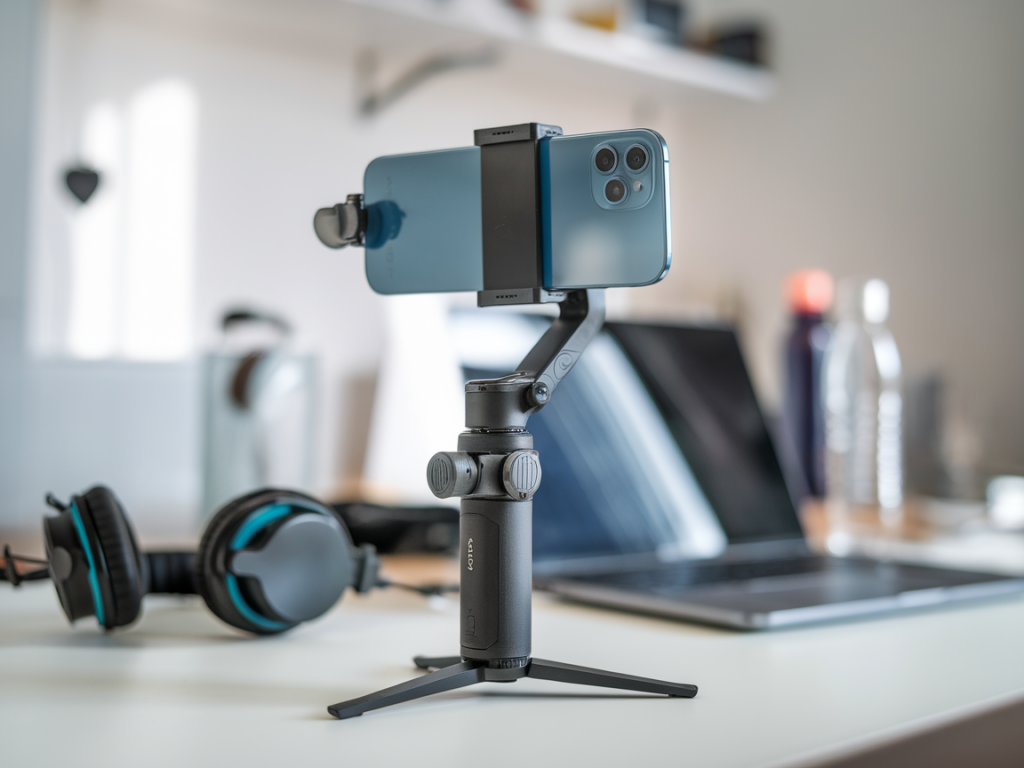
I travel light. My carry-on is often the only bag I allow myself, and that means every piece of kit has to earn its place. When I started vlogging with a smartphone, I realised a good compact gimbal is the single best upgrade you can make: it stabilises footage far better than in-phone software, extends shooting possibilities with smooth pans and timelapses, and—if you pick the right one—fits neatly into a small backpack or even a jacket pocket.
In this guide I share what I look for in a compact smartphone gimbal, the trade-offs to expect when you prioritise size, and the models I actually reach for on short trips. I’ll be blunt about things that frustrated me and highlight the practical benefits you’ll notice in day-to-day use.
Why choose a compact gimbal for travel?
Compact gimbals are about portability without sacrificing key functionality. For me that means:
- Folded size and weight: it must go into my small bag or a side pocket.
- Quick setup: I don’t want to spend ages balancing and calibrating between shots.
- Battery life: long enough for a day of shooting but not necessarily week-long use.
- Intuitive app and controls: reliable tracking and simple modes like timelapse, panorama and follow.
- Phone compatibility: strong enough motor to handle phones with cases and small foldable phones.
If you’re sacrificing axial range, you still want smoothness that looks professional. Smaller gimbals usually trade maximum payload for compactness, so don’t expect them to handle heavy video rigs or large external mics. But for smartphone vlogging and travel clips, they’re ideal.
How I test compact gimbals
My testing focuses on daily usage, not just lab specs. I compare:
- How fast the gimbal unfolds and balances — does it need a counterweight or complicated setup?
- App reliability and features — how often does ActiveTrack lose the subject, and is the app stable across Android and iOS?
- Battery practicalities — can I top it up with a power bank and does it support passthrough charging for the phone?
- Ergonomics — how comfortable is the handle for long handheld sessions?
- Portability — folded dimensions and weight with case.
Top compact gimbals I recommend for vlogging on the go
I’ve included gimbals that balance portability with useful features. Each one is something I’ve used or extensively compared in real situations.
- DJI OM 6 — My go-to for quick travel vlogs. It folds small, has excellent ActiveTrack, and offers a magnetic phone clamp that makes mounting and dismounting ultra-fast. The stabilisation is excellent for its size, and its app gives useful creative modes (Story mode, dynamic zoom, timelapse). Battery life is around 6 hours of moderate use; it supports charging via USB-C but not power-pass to the phone while recording. If you want the smoothest results with minimal fuss, this is a top pick.
- Zhiyun Smooth Q3 — A strong alternative if you want bold integrated lighting (on some editions) and an accessible price point. It’s slightly larger when unfolded than the very smallest models, but the build feels solid. Zhiyun’s tracking has improved and the Q3’s design is very travel-friendly. It’s particularly good when you vlog in low light thanks to its light ring option.
- FeiyuTech VLOG Pocket 2 — Ultra-compact and light enough to forget in your pocket. The catch: motors are smaller, so heavy phone cases or larger phones may struggle. Great for ultra-minimalists who prioritise size above all else. I use it for quick b-roll shots and walking sequences where I want minimal bulk.
- Hohem iSteady Mobile+ (or Hohem iSteady X1) — These are affordable, foldable gimbals with good battery life and surprisingly resilient stabilisation for the price. The app is functional and feature-rich enough for most vlog needs. Expect a slightly bumpier experience than DJI’s top-tier algorithms, but the price-to-performance ratio is excellent.
- MOZA Mini-MX / Mini-S — MOZA’s smaller models pack in creative features like inception mode and easy-to-use gesture control. The Mini-MX folds very compactly and has decent battery life, though the motors are a little weaker than DJI’s. I like MOZA for creators who want extra modes without adding bulk.
Compact gimbal comparison
| Model | Folded size (approx) | Battery life | Max phone weight | Notable pros |
|---|---|---|---|---|
| DJI OM 6 | Compact (pocket-sized when folded) | ~6 hours | ~290 g | Top stabilisation, fast magnetic mount, reliable ActiveTrack |
| Zhiyun Smooth Q3 | Small | ~8 hours | ~300 g | Built-in light ring options, strong feature set |
| FeiyuTech VLOG Pocket 2 | Very small | ~7 hours | ~250 g | Extremely portable, pocketable |
| Hohem iSteady Mobile+ | Compact | ~12 hours | ~300 g | Excellent battery life for price |
| MOZA Mini-MX | Very small | ~8 hours | ~280 g | Creative modes, gesture control |
Practical tips before you buy
Here are the things that saved me time and frustration while packing and shooting:
- Measure your phone with its case: Many people forget to include their case when checking compatibility. Some compact gimbals are tight on width and won’t take thick cases.
- Check folded dimensions — not just “compact” in marketing text: A gimbal that’s small but awkwardly shaped can be harder to stash than a slightly larger but neatly foldable one.
- Look for a magnetic mount or quick-release: A well-designed clamp can shave off minutes per shoot and reduce the temptation to re-balance mid-day.
- Consider what modes you actually use: If you only need simple follow and timelapse, don’t pay for a gimbal with dozens of bells and whistles you’ll never touch.
- App stability matters: A feature-rich app is useless if it keeps crashing on your phone model. Read recent reviews for your phone OS version.
- Get a small tripod or wrist strap: Many compact gimbals fold into a short tripod. That’s handy for static interviews or low-angle shots without extra kit.
Accessories that make travel vlogging easier
- Light, foldable mini-tripod — doubles as a grip and stabiliser for static shots.
- USB-C power bank with pass-through charging — useful if you plan long shooting days and your gimbal supports charging the phone.
- Thin phone case with a magnetic plate (if your gimbal supports magnetic mounting) — speeds up mounting while keeping bulk down.
- Small soft pouch or molded case — protects motors in transit. Even compact gimbals benefit from a little padding.
Choosing the right compact gimbal comes down to balancing size, stability and the features you’ll actually use. For me, the DJI OM 6 hits the sweet spot: fast to deploy, reliable tracking, and small enough to slip into my travel kit. But if you’re pinching every millimetre and gram, the FeiyuTech VLOG Pocket 2 or MOZA’s ultra-compact range might be your better fit.
If you want, tell me the phone you shoot with and how you travel (backpack, carry-on only, or checked luggage), and I’ll recommend the best specific model and accessories for your setup.