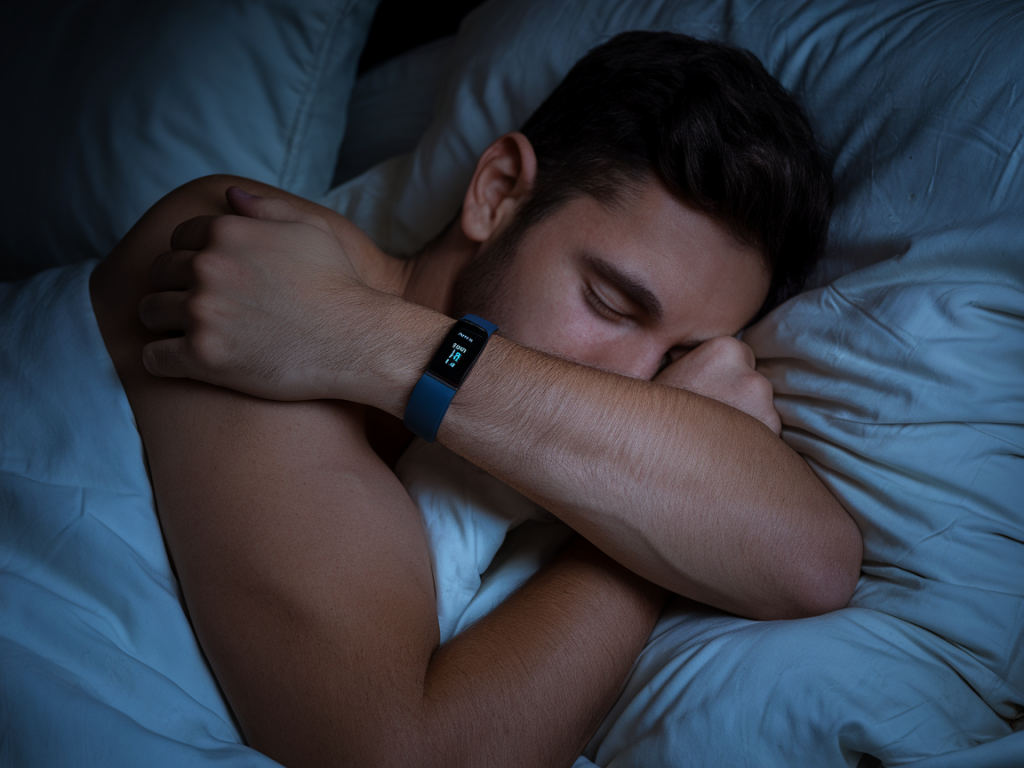
I’ve been wearing the new Fitbit Charge for the past two weeks, and because I’m one of those people who routinely tosses and turns, I focused the test on sleep-tracking performance in restless sleepers. I wanted to know: can a slim wrist tracker still deliver useful sleep data when you change position multiple times a night? Does it misclassify wakefulness? And perhaps most importantly for real users, does it give actionable guidance that helps you actually sleep better?
Why this matters for restless sleepers
Sleep tracking is only useful if the device can reliably detect when you’re asleep, when you wake, and the different sleep stages. For people who move a lot during the night, motion-based algorithms can confuse normal repositioning with wake episodes. That leads to overestimated wake time, underreported deep sleep, and unhelpful advice.
So I set out to test the Fitbit Charge in conditions that mirror real life: variable bedtime routines, naps, restless nights after caffeine, and nights when I intentionally got up several times. I paired the tracker with the Fitbit app on an Android phone and compared the nightly reports with a sleep diary I kept and with short video recordings on nights when I wanted exact timing for movement events.
How I tested it
My protocol was purposely simple, because most readers will use the Charge the same way. Testing happened over 14 nights:
On four nights I recorded myself with a small camera to timestamp major movement and wake events. I kept a sleep diary every morning noting perceived sleep latency, total time asleep, and notable awakenings. All nights used the default Fitbit firmware and sleep settings; I didn’t enable experimental labs features to keep the review relevant to out-of-the-box users.
Comfort and wearability
The Charge is slim and light, which matters for restless sleepers because bulky devices amplify the sensation of movement and make you more likely to wake. The band stayed comfortable even after nights where I shifted between side-sleeping and back-sleeping a lot. I did find the default band hole spacing sometimes felt a touch loose when I slept with my arm under my pillow — tightening one notch fixed that without feeling constrictive.
Battery life held well: I charged it twice during the two-week test, which included enabling heart-rate tracking and nightly sleep mode. That roughly aligns with Fitbit’s advertised endurance and was convenient — no mid-test interruptions.
How well it detects sleep vs. wake
On typical nights, the Charge’s sleep window detection was solid. It generally recognized bedtime within five to ten minutes of when I actually settled down and recorded wake time within a similar margin. Where it struggled was during short, quiet awakenings: if I opened my eyes and lay still for several minutes before getting up, the tracker often marked me as still asleep. That’s not necessarily a bad thing — Fitbit’s algorithm seems optimized to avoid overcounting brief awakenings — but it can underreport true wake minutes if you lie awake motionless.
On the intentionally restless nights, the Charge registered more wake episodes, but it didn’t always align perfectly with the camera timestamps. For example, several times when I sat up and scrolled my phone, Fitbit only flagged a single longer awake period rather than multiple short ones. For someone who gets up briefly and returns quickly, that smoothing can make the night's data look cleaner than reality.
Sleep stage detection: light, deep, REM
Sleep staging relies on heart-rate variability and motion. The Charge uses optical heart-rate sensors and accelerometers; it does a respectable job for broad trends.
| Metric | Fitbit Charge (observed) | My notes |
|---|---|---|
| Total sleep time | Within 10–20 minutes of diary/camera | Consistently close to self-reported sleep time |
| Light sleep | Often overrepresented | Common in restless nights — likely conservative staging |
| Deep sleep | Lower than subjective feeling | May undercount short deep-sleep bursts after movement |
| REM | Variable | Best for longer uninterrupted sleep windows |
In short: Fitbit’s staging seems optimized for long, consolidated sleep. If your night is fragmented, the Charge tends to show more light sleep and smaller deep-sleep blocks. That matches what I’d expect from motion+HR-based staging, and it’s useful for spotting trends (e.g., nights with less deep sleep) but not a substitute for clinical-grade measurement.
Accuracy vs. real-world usefulness
Accuracy in strict scientific terms is mixed — as with most consumer trackers, the Charge isn’t perfect at detecting every short wake event or delivering precise stage classification. But what I care about as a daily user is whether the data helps me make better choices. On that front, the Charge does well:
For people who toss and turn, the lesson is: don’t buy the tracker if you expect perfect, minute-by-minute wake detection. Buy it if you want reliable trend data and practical guidance — like seeing that late evening screen time or alcohol correlates with poorer deep sleep over several nights.
App experience and insights
The Fitbit app remains one of the stronger companion apps for sleep. I liked that it groups nights and allows easy week-over-week comparisons. The sleep insights offered were pragmatic: suggestions to improve sleep regularity, reminders about wind-down periods, and correlations (e.g., increased awakenings on late-caffeine nights).
For restless sleepers, two features stood out:
Tips I learned for better tracking when you toss and turn
Final impressions (no grand finale)
The Fitbit Charge doesn’t give perfect minute-by-minute sleep logs for restless sleepers, but it does provide trustworthy trends and practical guidance. It’s comfortable enough to wear every night, the app is helpful, and for most people who toss and turn, the Charge’s smoothing of brief awakenings is more useful than confusing.
If you want clinical accuracy or absolute wake detection, you’ll need a sleep lab. If you want a compact, comfortable tracker that helps you identify what’s changing your sleep over days and weeks — especially the lifestyle factors you can control — the Fitbit Charge is a solid choice.